TriasBio Request a design

mRNA medicines that make their protein at the right hour.

Same drug. Same dose. Different effect.

03:00Why care

Better drugs, found faster.

Timed to the body clock

  • Efficacy

    The drug acts when its target and the body’s response peak.

  • Toxicity

    It eases off when healthy tissue is most at risk.

Designed by Trias’s language models

  • Protein

    More protein from the same dose, and more hits per pipeline.

  • Screening

    Fewer sequences to make and test before one works.

04:00Why timing

Your body runs on a 24-hour clock. So does every drug’s effect.

75%

of 106 clinical trials that compared dosing times found the drug’s efficacy or toxicity depended on the hour.

Ruben et al., Science 2019 ↗

1.5M

patients in a COVID-19 vaccine study. Effectiveness moved 8.6% to 25% with the hour of the shot, and morning boosters cut hospitalizations against evening ones (HR 0.64).

Hazan et al., J Clin Invest 2023 ↗

56 of 100

best-selling US drugs target the product of a gene that rises and falls across the day.

Zhang et al., PNAS 2014

Disease keeps time too.

Ruan, Yuan, Eltzschig, Nat Rev Drug Discov 2021. Positions are approximate.

05:00Why timing

Short-lived drugs feel the clock most. mRNA is short-lived.

Across those 106 trials, drugs with half-lives under 15 hours showed time-dependent effects far more often than longer-acting ones.

mRNA’s short life is usually counted as its weakness. It is also what makes timing programmable.

Trials showing a time-of-day effect, by drug half-life

Ruben et al., Science 2019. Small molecules and biologics. The study did not include mRNA drugs.

06:00Platform

Every mRNA tool tunes how much protein. Trias times it to the body clock.

A 300-amino-acid protein can be written as roughly 10145 different mRNAs, more than the roughly 1080 atoms in the observable universe. Each one folds, lasts and gets translated differently. Codon choice, UTR motifs and RNA-binding sites set how long the message survives and when ribosomes read it. Trias pairs sequence design with proprietary circadian technology, so the protein arrives at the right hour and no patient has to change when they take a dose.

Anatomy of an mRNA5′ → 3′

  1. 5′ cap

    Guards the front end of the message and helps the ribosome load.

  2. 5′ UTR

    The ribosome binds here. Its motifs set how fast translation starts.

  3. Coding sequence

    Spells out the protein. Codon choice sets how fast it is read and how long the message lasts.

  4. 3′ UTR

    RNA-binding proteins and microRNAs dock here and set how fast the message decays. Many of them rise and fall over the day.

  5. Poly(A) tail

    A run of A’s at the end. Its length helps set how long the message lasts.

07:00Platform

Dose at any hour. The protein keeps its window.

Same dose, untimed Trias-timed Target window Toxicity-sensitive window Ribosome on the strand
00:0003:0006:0009:0012:0015:0018:0021:0024:00Protein levelTrias-timedUntimedDose14:00 00:0006:0012:0018:0024:00Protein levelTrias-timedUntimedDose14:00

Untimed peaks at 00:00, inside the toxicity-sensitive window.

Trias-timed peaks at 14:00, inside the target window.

The moving line plays through the day on its own and sets the hour on the strand. When it enters the target window, ribosomes (the green spheres) read the mRNA and a protein chain grows off each one. Outside the window they stop. Moving the dose changes the untimed curve only.

09:00Platform

A lab that runs around the clock.

Timing has to be measured at every hour of the day, and a CRO can’t do that. Every round of wet-lab data trains the next model.

12:00Traction

The first Trias model is open.

160,203 all-time downloads of the open Trias codon model Hugging Face ↗ · as of October 5, 2026 That public model was our first proof of concept, and it does not model timing. Our internal models have moved well beyond it.

Customers today

CROs, CDMOs, platform companies and therapeutics developers.

18:00Team

The people behind Trias.

Helene Borrmann, PhD (LinkedIn, opens in a new tab)

Co-founder & CEO
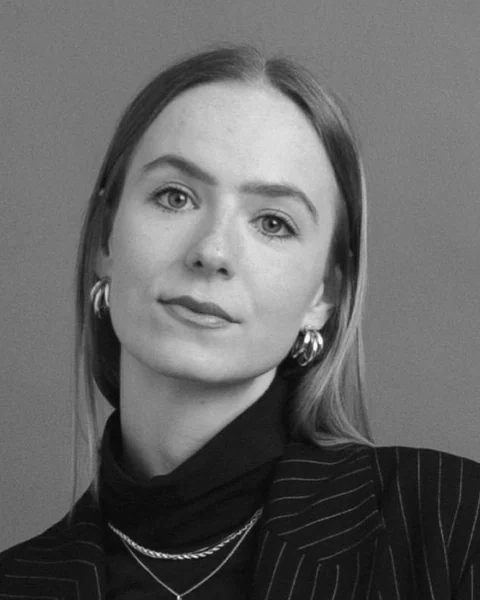
Circadian biologist. Postdoc, UC Berkeley. PhD, Oxford.

Helene has spent almost ten years studying how the body clock shapes infection and drug response. For her PhD at the University of Oxford she showed that clock genes control virus replication. As a postdoc at UC Berkeley she worked on how clocks drive parasite transmission. At Trias she leads strategy, partnerships and fundraising.

Previously · UC Berkeley · University of Oxford · Max Planck · Bayer
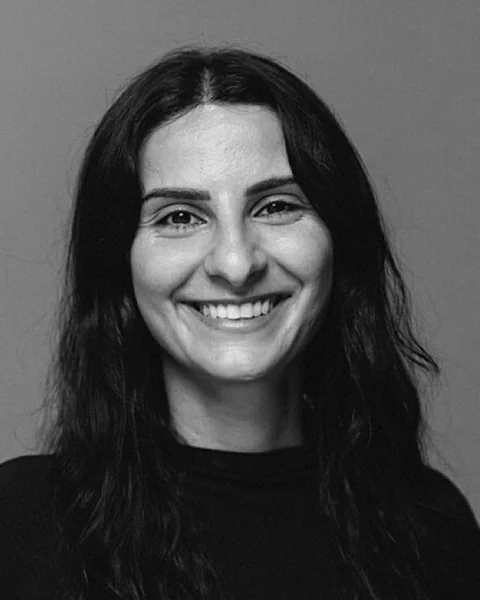
Marjan Faizi, PhD (LinkedIn, opens in a new tab)

Co-founder & CTO

Computational biologist. Postdocs, UC Berkeley and Harvard Medical School. PhD, Humboldt University Berlin.

Marjan builds language models for DNA and RNA. She did her PhD in computational biology at Humboldt University Berlin, then postdocs at Harvard Medical School and UC Berkeley. She was co-first author of HyenaDNA, a genomic model that reads a million bases at once, and first author of the Trias codon model, built at Berkeley. At Trias she leads models and compute.

Previously · UC Berkeley · Harvard Medical School · Humboldt University Berlin

Advisors

  • Prof. Liana Lareau

    UC Berkeley · CZ Biohub

    Studies how cells read RNA, using machine learning. Senior author on the Trias model.

  • Prof. Filipa Rijo-Ferreira

    UC Berkeley · HHMI

    Studies how circadian clocks in parasites and hosts shape infection.

  • Dr. Philippe Cronet

    Wacker Biotech

    Pharma development and contract manufacturing.

Investors

Programs and awards

  • Amgen Innovation Award
  • Genentech Team Award
  • UCL Innovation Fund

22:00Vision

The Circadian Company.

We believe in a future where Trias’s designs live inside every RNA therapeutic, with timing built into drug development infrastructure across modalities.

24:00Request a design

Let’s time yours.

Send the protein and the system you express it in.

Request a design

Investors: info@triasbio.com

Request a design

Send the protein and the system you express it in. We send back a Trias-designed sequence.

The protein, and the cells or animal model you express it in.

Opens your email app with a message to info@triasbio.com, ready to send.